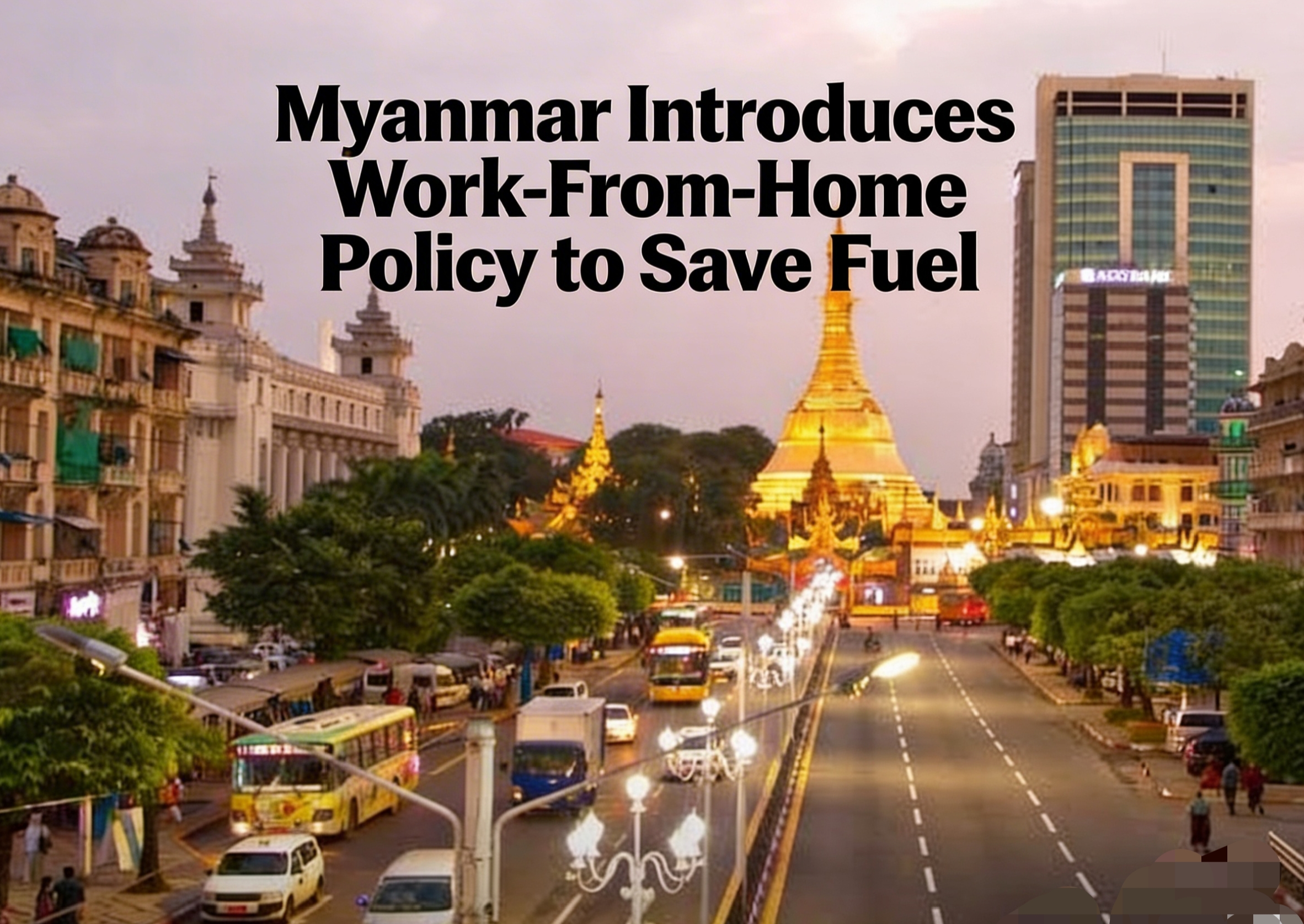
Government Responds to Energy Crisis
The government of Myanmar has introduced a new work-from-home policy to address its ongoing energy crisis. Starting March 25, 2026, many public sector employees will work from home every Wednesday.
This decision aims to reduce fuel consumption across the country. In recent months, Myanmar has faced serious fuel shortages. As a result, transportation and daily activities have become more difficult for many people.
Therefore, the government is taking steps to manage limited resources more efficiently. Officials believe that reducing commuting can help lower fuel demand.
How the Policy Will Work
Weekly Remote Work Schedule
Under the new policy, government offices will remain closed on Wednesdays. Employees will continue their duties remotely from home. However, essential services such as healthcare and security will still operate as usual.
This approach allows the government to maintain productivity while cutting fuel use. At the same time, it gives workers more flexibility in their schedules.
Focus on Fuel Savings
The main goal of the policy is to reduce fuel consumption. Fewer people commuting means less demand for gasoline and diesel. In turn, this helps ease pressure on the country’s energy supply.
Moreover, the policy may reduce traffic congestion in major cities. This could lead to additional fuel savings and improved air quality.
Use of Digital Tools
To support remote work, the government encourages the use of digital communication tools. Employees are expected to attend meetings online and complete tasks through digital platforms.
However, access to reliable internet remains a challenge in some areas. This issue may affect how effectively the policy is implemented.
Impact on Daily Life and Economy
The new work-from-home policy may bring both benefits and challenges. On one hand, it can help conserve fuel and reduce transportation costs for workers. On the other hand, some businesses may experience lower customer traffic on Wednesdays.
For example, small shops and street vendors often depend on office workers. With fewer people traveling, their daily income may decrease. As a result, some local businesses could be affected.
Meanwhile, employees may need time to adjust to remote work. Not everyone has a suitable home environment for working. Despite this, many workers may welcome the reduced need to commute.
A Step Toward Long-Term Solutions
The introduction of remote work is seen as a short-term solution to the energy crisis. However, experts believe Myanmar needs long-term strategies as well. These may include investing in renewable energy and improving infrastructure.
In addition, better fuel management and supply systems are necessary. Without these changes, the country may continue to face similar challenges in the future.
Looking Ahead
As the policy begins on March 25, its effectiveness will be closely monitored. The government may adjust the plan based on results and public feedback.
If successful, the work-from-home system could become a regular practice. It may also inspire other countries facing energy shortages to consider similar measures.
Myanmar’s decision reflects a practical response to a difficult situation. While challenges remain, the policy offers a way to reduce fuel use and adapt to current conditions.


