Overview of the Re-election
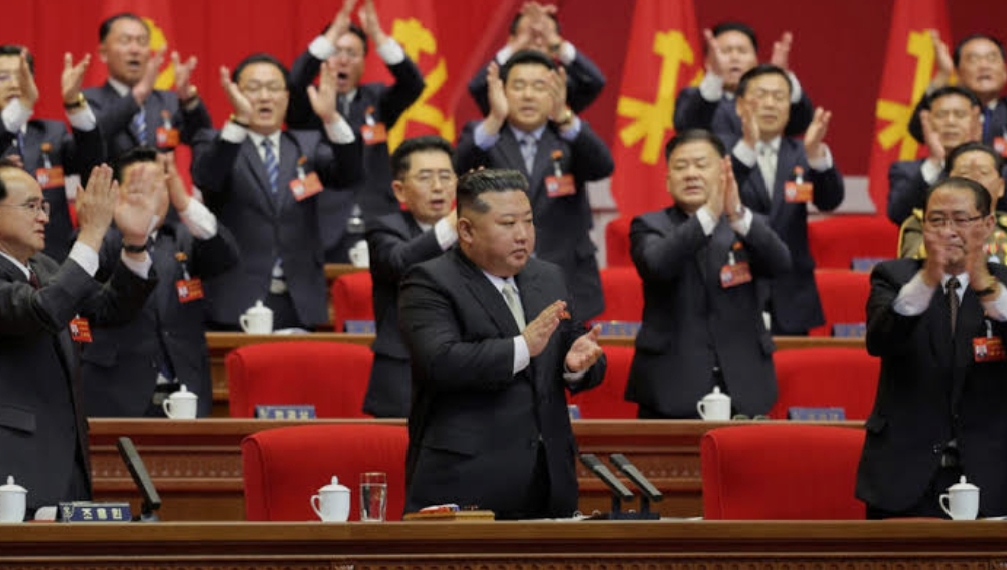
Kim Jong Un has been re-elected as President of State Affairs during the 15th session of the Supreme People’s Assembly held on March 22, 2026.
The session represents one of the highest political gatherings in North Korea. During this meeting, key decisions about leadership and state policies are made.
According to state media reports, the re-election showed strong and unanimous support for Kim Jong Un’s leadership.
Role of the Supreme People’s Assembly
The Supreme People’s Assembly is the highest legislative body in North Korea.
It meets to approve important political decisions, including leadership appointments.
Although it functions as a formal institution, decisions are often aligned with the country’s central leadership.
As a result, major leadership changes or confirmations usually receive strong backing during these sessions.
Reported Support for Leadership
State media reported that the decision to re-elect Kim Jong Un received “absolute support.”
This suggests a unified political environment where leadership decisions are widely endorsed.
In addition, such reports often emphasize stability and continuity in governance.
The government highlights unity as a key strength of the political system.
However, outside observers may interpret these reports differently due to limited independent verification.
Importance of Leadership Continuity
Continuity in leadership plays an important role in North Korea’s political system.
It allows long-term policies to be implemented without interruption.
Furthermore, stable leadership can help maintain control over economic and military strategies.
Because of this, leadership continuity is often presented as essential for national stability.
The re-election of Kim Jong Un reflects this approach to governance.
Domestic and International Context
North Korea’s political decisions are closely tied to both domestic and international factors.
Domestically, leadership decisions aim to maintain stability and control.
Internationally, the country continues to face diplomatic and economic challenges.
Therefore, leadership continuity can be seen as a way to navigate complex global conditions.
At the same time, policies and decisions are shaped by internal priorities and national interests.
The re-election of Kim Jong Un as President of State Affairs during the 2026 Supreme People’s Assembly highlights continued leadership in North Korea.
With reported strong support, the decision reflects the country’s focus on stability and continuity.
While state media emphasizes unity, the situation remains closely observed by the international community.
In the end, this leadership decision plays a key role in shaping the future direction of the country.